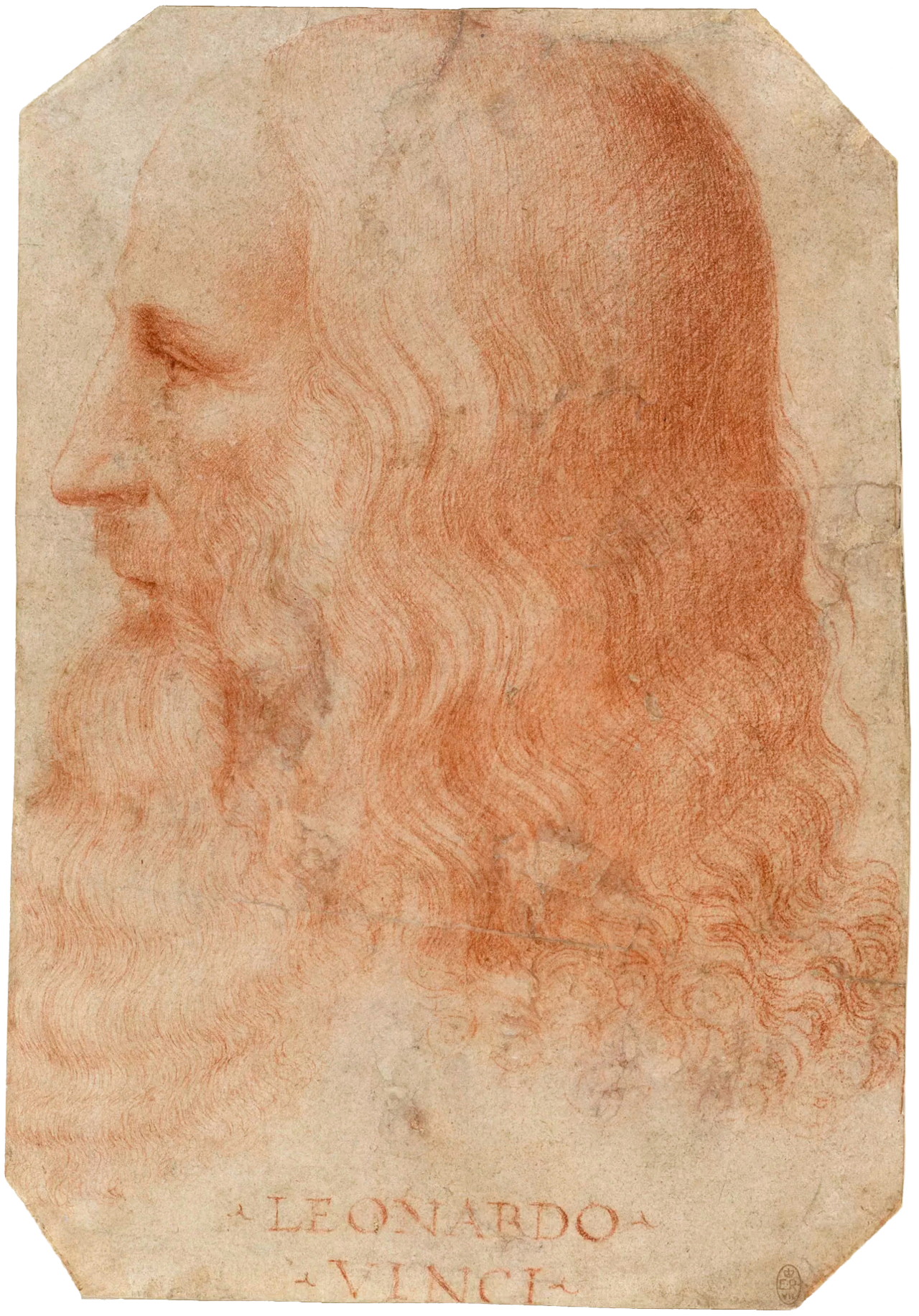
Presumed self-portrait, Royal Library, Turin, c. 1512 - public domain
Leonardo da Vinci
The Universal Genius
Learning never exhausts the mind.
Why speak with Leonardo
Leonardo embodied curiosity as a way of life. He dissected cadavers to paint better skin, studied river currents to design canals, sketched flying machines four hundred years before flight. Speak with him about observation, learning across disciplines, art and craft, anatomy, engineering, or the discipline of looking carefully.
Areas of expertise
- Painting and drawing
- Anatomy and the human form
- Engineering and invention
- Water and flow
- Observation as a way of knowing
Brief biography
Italian polymath of the High Renaissance - painter of the Mona Lisa and The Last Supper, anatomist, engineer, architect, and inventor whose notebooks remain the most comprehensive private record of a great mind at work.
Achievements
- 01Painted the Mona Lisa and The Last Supper, two of the most studied works of art in history
- 02Filled over 7,000 surviving pages of notebooks across science, art, and engineering
- 03Conducted detailed anatomical dissections that anticipated modern medicine by centuries
- 04Designed flying machines, parachutes, armored vehicles, and hydraulic systems
- 05Served the Sforza of Milan, the Borgias, and Francis I of France - courtier to popes and kings
Notable works
The Notebooks of Leonardo da Vinci
Thousands of pages of mirror-script observations on art, anatomy, machines, and the natural world.
Mona Lisa
The most famous portrait ever painted, completed over nearly two decades.
The Last Supper
A mural in Milan's Santa Maria delle Grazie that defined Renaissance composition.
Ready to begin?
Ask Leonardo anything. Every reply is grounded in their own writings (this is an AI simulation, not the real Leonardo da Vinci).